


It’s a budget smartphone by Xiaomi. Lets review this phone which comes in three variants of the Redmi Note 4 with different memory configurations.

Specifications:
- 5-inch full HD display
- Qualcomm Snapdragon 625 processor
- 4GB RAM+64GB storage
- 13MP rear camera + 5MP front camera
- 4100 mAh battery
- MIUI 8.0 with Android Marshmallow
Design
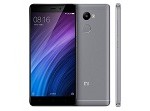
It comes with a metal chassis and a 2.5D curved edge glass up front. The device fits nicely on the arm. At the back there are antenna lines running across the top and bottom which break up the design while improving signal reception. The speaker is at the bottom instead of the back and the device has only a single speaker
Its 8.3mm, the Redmi Note 4 is slimmer than its predecessor, but a little heavier. It is well built and design is revolutionary and little changed from its predecessor.
Display
The Redmi Note 4 sports a 5.5-inch Full HD IPS display. The 1080 x 1920 resolution translating to a pixel density of 401ppi. The display is same as its predecessor but it is brighter than the one last time. The color accuracy is also better. For a budget device, the display is quite good. The text and images are sharp and the colors are quite good. There is a black border around the display.
Performance
It is Powered by an octa-core Qualcomm Snapdragon 625 (MSM8953) processor clocked at 2GHz and an integrated Adreno 506 GPU. The Redmi Note 4 comes in three RAM configurations 2GB, 3GB, and 4GB with 32GB or 64GB of internal storage.
The Redmi Note 3 was powered by the Snapdragon 650 chipset, but the Redmi Note 4 is really amazing. Not like its predecessor 28nm Snapdragon 650, the Snapdragon 625 is built on the 14nm architecture and is better energy efficient
There is no lag switching between apps and while multi-tabbed browsing. The 2GB variant though could be a tad rough for a power user, but would be good enough for a casual user.
Multi-tasking on the Redmi Note 4 is okay, and it can handle graphic-intensive games without any issue.
Hardware
The Redmi Note 4 features a hybrid SIM tray so you can either use two SIMs or one Nano-SIM and one microSD card too.
You might want to see that you want the 32GB and 64GB variant if you want to use two SIM cards. The Redmi Note 3 supported microSD cards of up to 32GB only which was good. In Xiaomi Redmi Note 4 you can put in those 128GB microSD cards as well.
Now it is Type C port instead of a microUSB port. The Redmi Note 4 has a fingerprint scanner on the back and below is the camera
Camera
It has a 13-megapixel rear camera with f/2.0 lens which is quite good. The 5MP front camera sports a f/2.0 lens and the selfies in good light conditions come out quite okay with good color accuracy and details.
For video recording the rear camera can record videos at 720p and the quality is good enough.
The camera app on the Redmi Note 4 includes a variety of modes which includes a manual mode that lets you use the ISO, white balance, and exposure settings and other options.
Software
Xiaomi Redmi Note 4 consists of a MIUI 8 Android 6.0.1 Marshmallow. The company is also testing a Nougat preview of MIUI and will be rolling it in the coming months. On the Redmi 4 MIUI 8 is quite smooth and polished
Conclusion
If you are using the Xiaomi Redmi 3 then I do not really see a good reason to upgrade for just little improvements. The Redmi Note 4 is not that perfect but it is good that one wouldn’t hesitate to recommend to anyone who is looking for budget or mid-range smartphone. It is Packed in a neat chassis and the smartphone performs great and is a good value for money.
Pros:
Good design and the build quality
Excellent battery life
Good performance
Bright display
Cons:
Average camera
Fast charging
Slow fingerprint authentication
Written By Imran Zaheer
Related News
 Xiaomi now offers Redmi 4A only PKR. 13,900.
 Xiaomi Redmi 4’s First sale in India: It Remarkably Sold 250,000+ units in 8 minutes.
 Xiaomi Revealed Its Redmi 4 in India
 Xiaomi Mi 6 Review
 Top 10 Smartphones Releasing in August-September 2017 worth Waiting For!
 Xiaomi Mi 6 and Mi 6 Plus Review
 Xiaomi Mi Mix 2 Review
 Xiaomi Redmi Note 3 Review.
